
Uncle Owl in Little Horse, Don’t Be Afraid!: The Embodiment of Quiet Wisdom
Updated: Jul 2
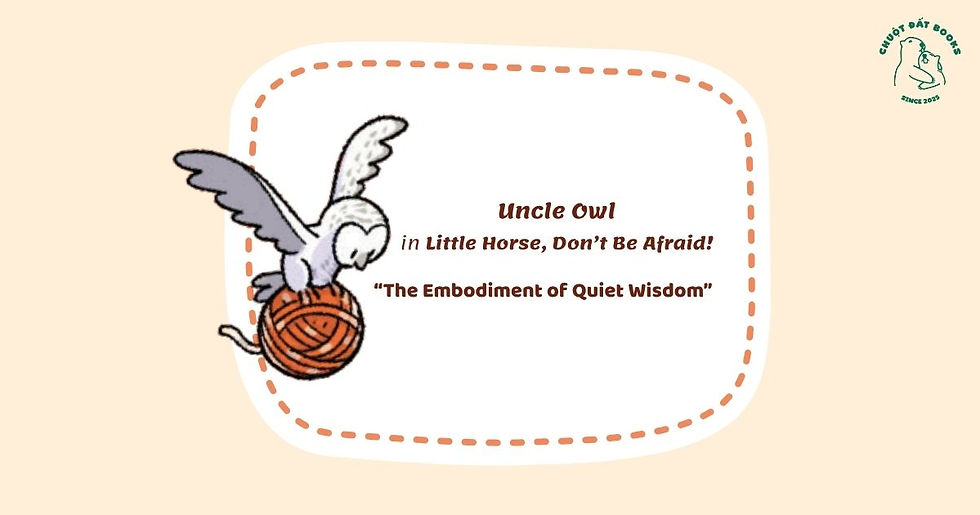
In Western culture, owls have long been seen as symbols of calmness, insight, and wisdom. They observe the world with quiet eyes, never loud or imposing, yet always reassuring and dependable.
Inspired by this enduring symbolism, the Owl character in Little Horse, Don’t Be Afraid! appears as a gentle and caring friend who helps young readers learn how to face and soothe their first fears.
How Owl Helps Little Horse Overcome Fear
In a child’s innocent world, fear rarely comes from grand or overwhelming dangers. More often, it arises from unexpected events beyond their control. A long shadow on the wall, a distant clap of thunder, or even the sudden pop of a balloon can instantly disrupt a child’s sense of safety and peace.
In this Chuột Đất Books story, Little Horse is startled and frightened by the sudden “bang!” of a bursting balloon. As panic begins to take over, Owl’s calm presence becomes the lifeline that changes everything.
From a Comforting Hug to a Thoughtful Alternative
Rather than dismissing the fear with phrases like, “There’s nothing to be afraid of,” or unintentionally making the situation worse, Owl chooses a thoughtful and empathetic approach. Owl understands that when a child is scared, what they need most is not logic, but reassurance, comfort, and a safe way to process their emotions.
Gently approaching Little Horse, Owl offers a new ball—not an air-filled rubber balloon, but a soft wool ball.
A soothing sensory experience: The warm, fluffy texture of the wool immediately provides comfort when held in Little Horse’s hands, helping to calm an overstimulated nervous system.
A new perspective: This simple gesture naturally shifts Little Horse’s thinking. Although both objects share the familiar shape of a ball, the wool ball has a completely different quality: it will never make the frightening, unexpected sound that caused the fear in the first place.
A Powerful Lesson Behind a Quiet Act
Owl’s gentle response is far more than a simple replacement toy. It carries an important lesson that parents can learn from as well. Through this experience, Little Horse discovers:
“Not everything in the world is dangerous or frightening. Sometimes, when we change our perspective and approach things differently, the world can feel safe, gentle, and welcoming once again.”
With Owl’s compassionate guidance, Little Horse gradually transforms fear into confidence, regaining the courage to return to play and explore with peace of mind. In many ways, Owl represents the ideal parent—not someone who removes every obstacle from a child’s path, but someone who teaches children how to view challenges with courage, resilience, and trust.
Encouraging Meaningful Conversations Beyond the Last Page
The value of a great children’s book does not end when the final page is turned. In Little Horse, Don’t Be Afraid!, the end of the story opens the door to meaningful conversations that help children reflect on emotions, relationships, and the world around them.
Questions That Spark Curiosity
After reading, children often begin asking thoughtful questions:
“Why was Little Horse so afraid of the balloon popping?”
“Why did Owl appear at just the right moment to help?”
Questions like these show that children are doing more than simply listening. They are connecting with the characters, imagining different perspectives, and developing empathy. These early “why” questions lay the foundation for critical thinking and emotional intelligence (EQ).
Parents as Companions in a Child’s Emotional Journey
When children ask questions, many parents instinctively search for the most logical or accurate answer. Yet in childhood, the most important thing is not always providing the perfect explanation.
"Children often need someone who listens more than someone who lectures."
The true value of reading together lies in being present-listening patiently, encouraging curiosity, and exploring ideas side by side. When parents welcome a child’s questions and invite discussion, they create a safe space where children feel comfortable expressing their thoughts and emotions.
Through these conversations, children learn to:
Name their emotions by recognizing fear as a natural human feeling.
Understand their fears by identifying where those feelings come from.
Build courage by learning, like Little Horse, to see situations from a new perspective.
By turning every book into an open conversation, parents not only expand their child’s vocabulary and curiosity but also help build emotional resilience-preparing them to face life’s unexpected “popping balloons” with confidence.
A Gentle Lesson Wrapped in Kindness
The Owl character embodies the empathy and understanding that Chuột Đất Books hopes to share through this story. Through Little Horse, Don’t Be Afraid!, we hope children discover not only an engaging story but also a warm embrace and gentle encouragement-giving them the confidence to explore the world around them with curiosity, courage, and joy.
Open Little Horse, Don't Be Afraid! with your little one to meet wise Uncle Owl and discover this heartwarming story together.


Comments